We had been inside Kruger National Park for less than five minutes when my sister suddenly shouted, “STOP!”
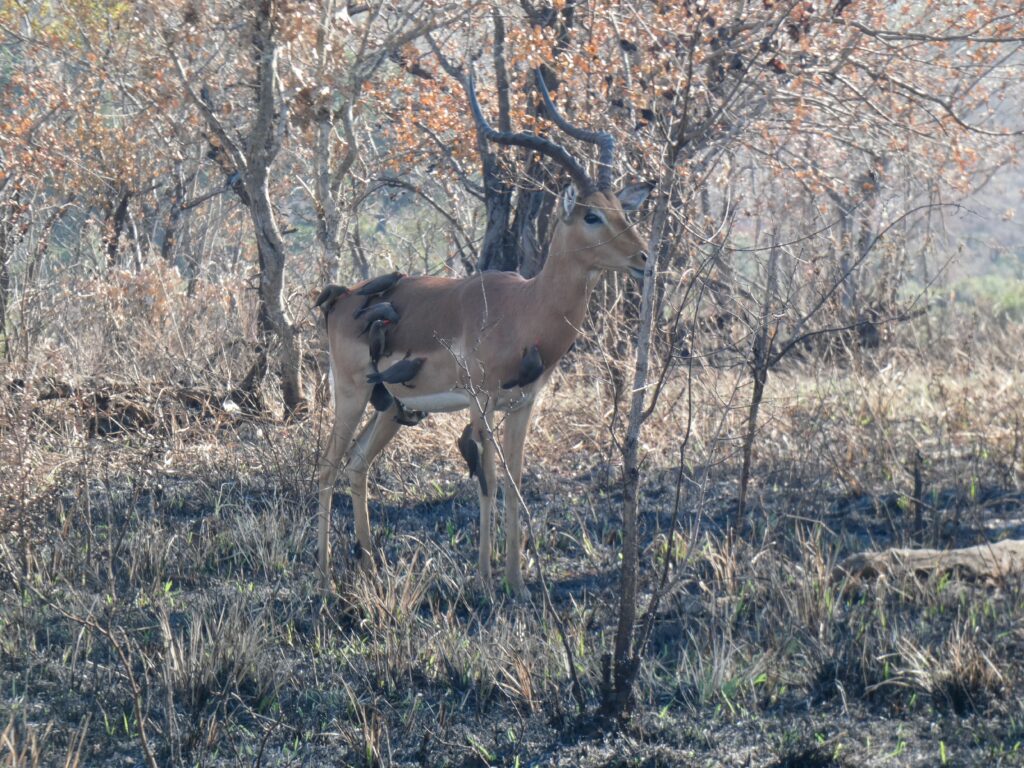
I hit the brakes, looked around, and couldn’t see anything unusual. Just a small herd of impalas.
“They’re beautiful,” she said, admiring their graceful legs and the sweeping horns of the males.
I smiled. I didn’t tell her she’d probably see thousands more over the next five days. Instead, I appreciated the reminder that even Africa’s most common animals are extraordinary when you’re seeing them for the first time.
This year marks a special milestone for Kruger National Park. Established in 1926 to protect wildlife that had been severely depleted by hunting, the park is celebrating its centenary. Covering nearly 19,500 km² (7,523 square miles)—about the size of Wales, Israel, or New Jersey—it stretches an incredible 350 kilometers (217 miles) from north to south. Named after Paul Kruger, the fifth president of the South African Republic, it has become one of the world’s greatest conservation success stories.
Last month I had the pleasure of sharing this remarkable place with my sister on her first trip to Africa and her first safari.
Seeing Africa Through Fresh Eyes
We entered through Malelane Gate and headed toward Pretoriuskop Rest Camp. My sister’s excitement was contagious. Every impala, every bird, every movement in the grass was worth stopping for.
Sometimes those stops paid off.
Not long after entering the park, we joined one of the familiar Kruger rituals: a slow-moving line of cars. It’s a funny experience because no one really knows what they’re waiting for. You simply trust that someone farther ahead has found something worth seeing.
As we crept forward, people pointed toward the grass on the left side of the road. I lifted my binoculars and began scanning.
First, I spotted the black tear marks. Then the golden coat.
Two cheetahs, a mother and her nearly grown cub, were resting quietly in the shade.
I handed the binoculars to my sister and tried to explain where they were. I’d forgotten that binoculars take practice. Finding the right patch of grass, holding them steady, focusing the lenses—it isn’t as easy as it sounds. After several attempts and a few helpful landmarks, she finally found them.
They weren’t hunting or moving. They were simply resting.
And somehow, that was enough.
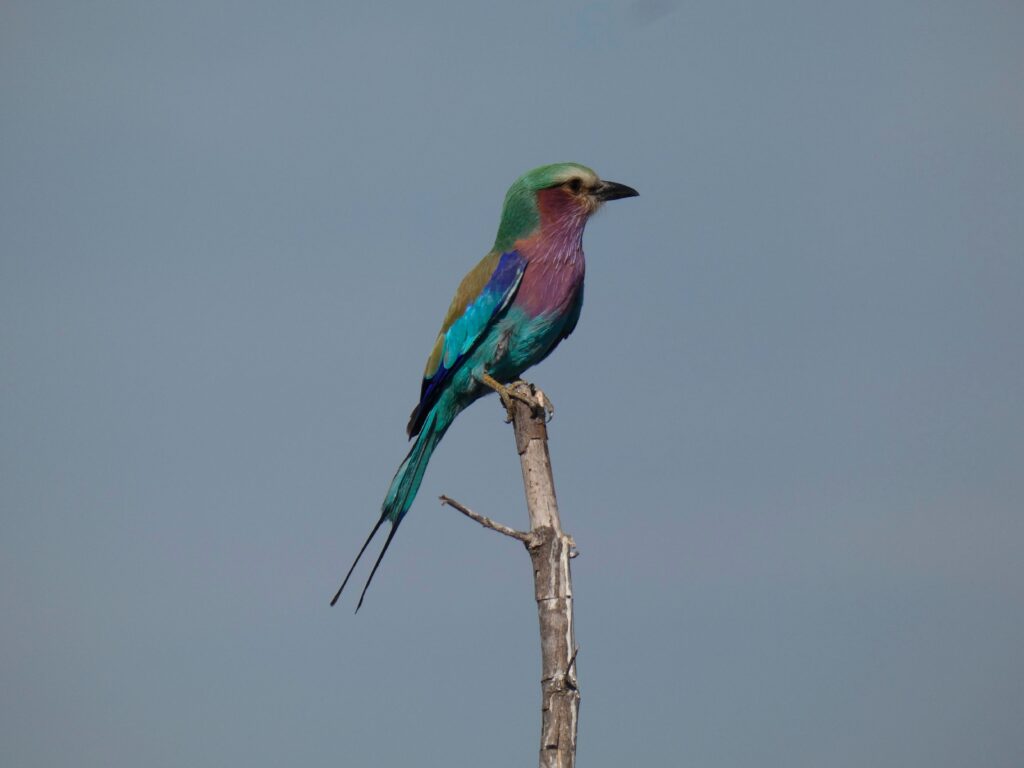
As we continued north, we encountered kudu, elephants, giraffes, zebras, hippos, Cape vultures, waterbuck, and one of my favorite birds—the lilac-breasted roller.
I joke that lilac-breasted rollers are the impalas of the bird world. They’re common enough that guides sometimes drive right past them. Yet every single time I see one, I’m captivated by its brilliant turquoise wings, lilac breast, emerald-green head, and golden brow. Whether it’s the first sighting or the hundredth, they’re simply stunning.
Living Inside the Park
One piece of advice for anyone planning a visit: book your accommodation early.
Rooms inside Kruger disappear months in advance, especially during the dry winter season. We managed to stay inside the park every night, although it required a bit of creative planning on my sister’s part.
The accommodations are simple but comfortable. Most units have a bathroom, refrigerator, and small kitchen. Every rest camp has a shop for groceries, and if cooking isn’t on the agenda, there are restaurants ranging from Wimpy at Pretoriuskop to Mugg & Bean at Lower Sabie, Cattle Baron at Skukuza, and Tindlovu at Olifants.
One feature I especially enjoy is the wildlife sighting board found at every camp. Visitors place small colored markers showing where they have recently seen lions, leopards, elephants, rhinos, buffalo, cheetahs, and wild dogs. There are separate boards for today’s sightings and yesterday’s sightings.
It’s a wonderfully simple idea that transforms thousands of independent visitors into one giant wildlife-spotting team.
A Participatory Safari
That same spirit carries over into the guided game drives.
We joined a sunrise drive, a sunset drive, and a night drive, each aboard one of Kruger’s open safari vehicles.
What surprised me most was how participatory the experience was. The ranger drove the vehicle and provided the spotlights, but everyone became part of the search team. Passengers swept the bush for glowing eyes, whispered directions, and called out potential sightings.
The guide may know where to look, but many of the animals are first spotted by fellow travelers.
It’s a wonderful reminder that you get out of the experience what you put into it.
Three Unforgettable Sightings
One morning we turned onto a gravel road after noticing several vehicles stopped ahead.
At first, I saw three spotted hyenas racing around excitedly.
Then four more appeared.
Nearby, a mother lay nursing her cub.
Watching an entire hyena family interacting was extraordinary, but the surprises weren’t over.
Another car drove past us and mentioned there were lions nearby.
We patiently waited our turn before pulling into the viewing spot.
There, almost perfectly camouflaged among the dry grass, sat three lionesses.
I still have no idea how the first person spotted them.
No one else was waiting, so we watched them peacefully for nearly fifteen minutes before another car finally arrived. We pointed toward the lionesses, received an enthusiastic thumbs-up, and moved on.
Even self-drive safaris, I realized, are participatory sports.
Later that day another line of vehicles revealed a different scene.
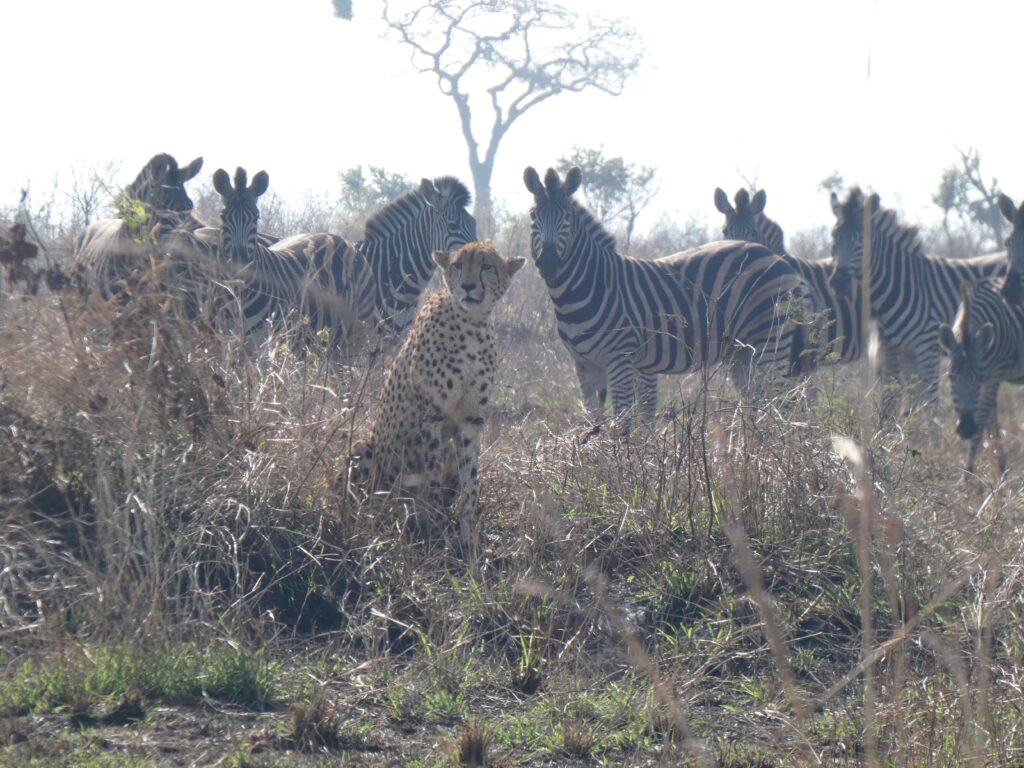
A large herd of zebras stood absolutely still, eyes focused in the same direction.
After a careful search, I found the object of their attention.
A lone cheetah.
The zebras snorted, flicked their tails, and watched every movement while the cheetah appeared almost completely uninterested in them. I’d always heard that adult zebras are generally too formidable for cheetahs to hunt, so perhaps everyone was simply acknowledging one another’s presence.
Even so, it was fascinating to watch the tension unfold.
My final favorite sighting happened on our last full day in the park.
We had been searching for African wild dogs all week.
As we rounded a bend, an animal darted across the road.
For a split second I thought it was a hyena.
Then I realized it was a wild dog!
Before I could even raise my camera, it disappeared into the bush.
As another vehicle approached from the opposite direction, I rolled down my window and began chatting with the driver about the sighting.
His name was Tom.
He smiled and said, “There are seven of them. I’ve been following them all morning.”
Tom turned out to be a marine biologist, professional wildlife photographer, and founder of an organization called Protect What You Love. He had spent years working to change public perceptions of sharks because they are so often misunderstood and feared.
“If you’re interested in misunderstood animals,” I laughed, “feel free to shine a light on baboons.”
Before parting ways, we exchanged WhatsApp numbers and agreed to search for the dogs one last time the following morning.
We were waiting at the gate when it opened at 6:00 a.m.
Tom was right behind us.
We drove the same roads together but found nothing. Eventually we stopped at a viewpoint, wished each other safe travels, and headed in opposite directions.
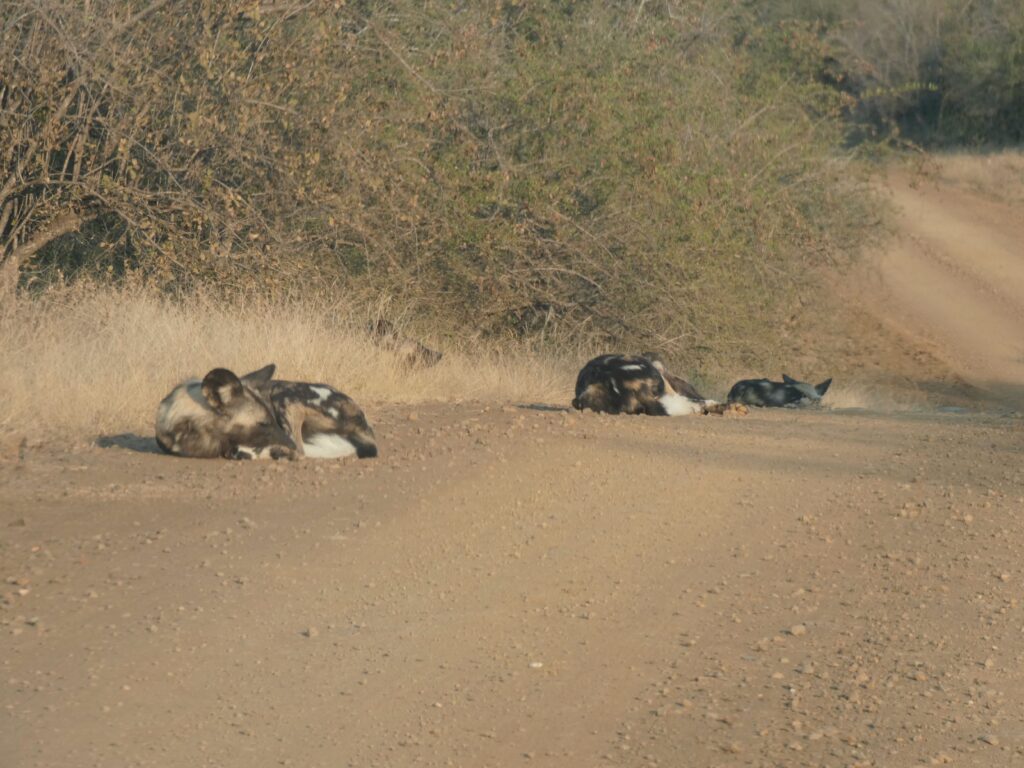
We hadn’t driven much farther when there they were.
Seven African wild dogs.
Fast asleep beside the road.
I couldn’t believe our luck.
The first thing I did was call Tom.
“Turn around,” I said. “They’re here!”
A few minutes later he joined us with his cheerful smile and big camera. We spent a long time simply watching them sleep.
As more vehicles arrived, we pulled forward so others could enjoy the view as well.
It seemed like the perfect ending to our safari.
Lessons from Kruger
Kruger gave us unforgettable wildlife sightings, but it also reminded me of something deeper.
Whether it’s visitors sharing locations on a sighting board, strangers pointing out hidden lions, fellow passengers spotting animals on a night drive, or calling someone back to see endangered wild dogs, the park works because people help one another.
Conservation is a shared effort.
Adventure is richer when it’s shared.
Life, I’ve decided, is a participatory sport.
If you’re planning your own visit, here are my biggest takeaways:
- Book accommodations well in advance, especially if you hope to stay inside the park.
- Spend time in southern Kruger if seeing big cats is high on your wish list.
- Don’t overlook the common species. An impala or lilac-breasted roller can be just as memorable as a lion when you take the time to appreciate them.
- Share your sightings. Helping someone else experience a special moment is almost as rewarding as finding it yourself.
- And if you’re lucky enough to see African wild dogs, savor every second. They’re among Africa’s most endangered carnivores, and every sighting feels like a gift.
Field notes
Although this month included a wonderful adventure with my sister, fieldwork didn’t stop. I’ve completed 40 baboon surveys and, true to form, found myself scanning for baboons everywhere we went—including in Kruger! We saw three troops, and I’m hopeful I’ll be back in the northern part of the park in August or September to conduct formal surveys—pending approval of my research permit from SANParks. Fingers crossed or holding thumbs as they say in South Africa!
Every survey, every conversation with landowners, and every troop I encounter adds another piece to the puzzle of how Limpopo’s baboon populations have changed over the past five decades. It’s exciting to see the picture gradually come into focus.
Until next month,
Paula
0 Comments