Fieldwork often begins long before the first transect is walked. It starts with conversations, introductions, cups of coffee, and the kindness of people willing to help a stranger with a research project.
February turned out to be exactly that kind of month.
Unlike January, which was filled with wildlife sightings and long walks in the bush, February was all about people and connections.
I spent more time at the University of Venda getting to know my two students and helping them develop their project proposals and study designs. One student will examine what drives human–vervet monkey conflict on campus. My money is on trash from recent trips to KFC and the local pizza place. After all, who can resist pizza bones?
The other student will investigate human–baboon conflict in citrus orchards. Using camera traps, she will identify which animals are entering the plantations and whether animal intrusion differs when field guards are present versus absent. She will also look at crop loss and try to determine what is causing it—animal damage, insects, or possibly weather.
I’ve spent several mornings sitting at kitchen tables and standing beside orchards with local farmers. The dominant crops here seem to be macadamia nuts, avocados, citrus, tomatoes, and butternut squash. People have been incredibly generous with their time, sharing stories about strategies they’ve tried to protect their crops—some that work, some that worked for a while, and others that turned out to be a complete waste of money – like the robotic scarecrow, which looks like an Afrikaans farmer holding a gun. Apparently, it worked just long enough for the baboons to learn to ignore it—and for the noise to annoy the neighbors.
Another big development this month: I found a field assistant! He’s a recent graduate from the University of Venda’s Environmental Science program. He’s Venda, interested in citizen science, volunteers with the Vhembe Biosphere Reserve, and is also a musician. We’ll start walking transects soon.
I was also introduced to the Farm Watch group. There are around 175 of these groups in Limpopo, all working to reduce crime and strengthen community connections. They have agreed to help connect me with landowners whose properties my transects cross. I am beyond grateful.
I even had the pleasure of spending a morning with the Farm Watch director. The position is entirely voluntary, yet despite his full-time job, farm, and family responsibilities, he took time to show me around the area and introduce me to several people. That kind of generosity has been a recurring theme here.
Another wonderful connection came when I met local baobab expert Sarah Venter. She’s an amazing woman who grew up in the area, speaks fluent Venda, knows baobabs inside and out, and is simply a delightful person. When I showed her where my transects were located, she already had information on about half of them. Later this month, when she has fieldwork of her own to do, we’ll walk one of my transects together. You can read about her research here.
One of the most unexpected moments of the month came from that same conversation with Sarah. I told her that I was replicating a baboon survey conducted 50 years ago.
She paused and asked, “Was one of the co-authors Max Keith?” I was surprised she knew the name. When I said yes, she replied, “I’m good friends with Max’s son Mark. Would you like to meet Max? He’s 92 and lives in Pretoria.”
What serendipity.
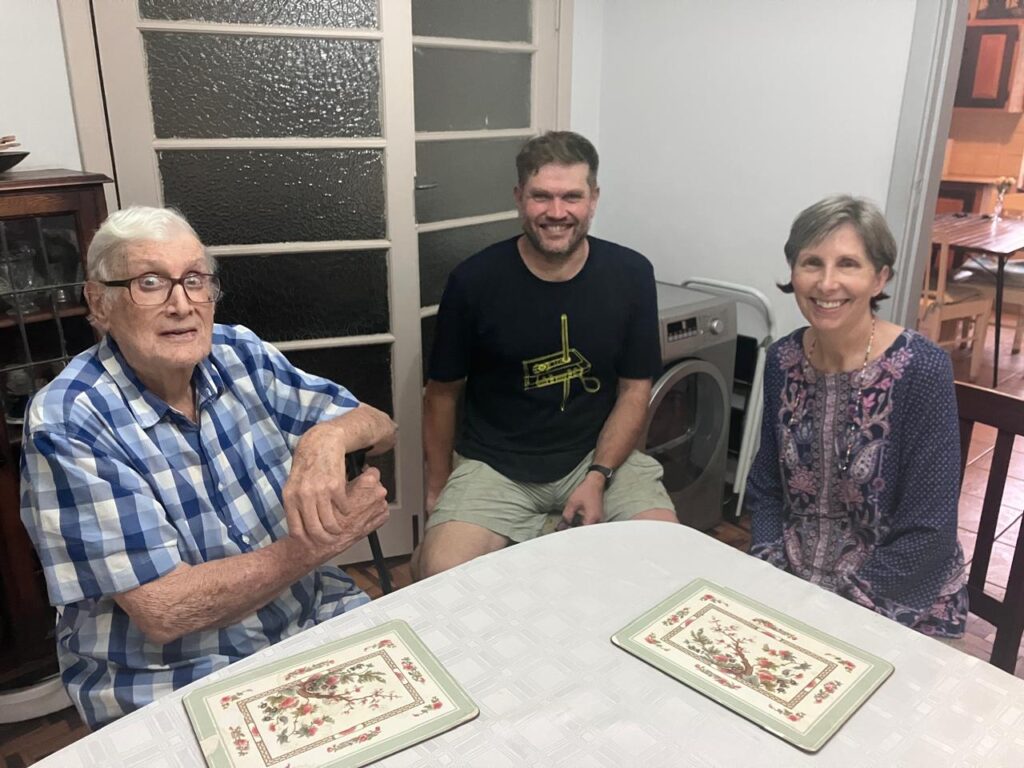
So I took a road trip to Pretoria and met Max and his family. When they told him about my project, he shared notes he had taken about interesting baboon behavior he had observed decades ago. It was a remarkable moment—connecting past research with the present.
I also had the chance to tell him how important his work has been. His study was one of only two that surveyed baboons across such a large landscape, and it helped inspire me to pursue this research and apply for a Fulbright.
Meanwhile, I’m staying on a lovely farm, and the owners have been absolutely wonderful. They check in on me, invite me over for dinner and wine, and offer advice on everything from where to get my hair cut to where to buy loppers and the best place for groceries.
Community connections run deep in northern Limpopo. In just a short time, people here have welcomed me, shared their knowledge, and helped me navigate both the research and daily life in this community.
Fieldwork may focus on wildlife, but it’s people who make it possible.
2 Comments
Daniel and Jenny · March 11, 2026 at 2:00 am
What a great update! Thank you for sharing and doing the hard work!
-Daniel and Jenny
Jenny Giddy · March 13, 2026 at 7:26 am
Wonderful to read about your project and all the amazing people you are meeting. Thanks Paula.