I could have sworn I just wrote my February update—and somehow, it’s already April. At first, it felt like March passed quietly. Then I looked at my calendar.
This month, above all, was about connections.
When it comes to the transects I’ll be walking, those connections came in unexpected forms: farmers, a butcher, and even a dentist. To ensure scientific rigor, my transects were computer-generated and randomly placed across northern Limpopo. The challenge has been figuring out who owns each piece of land so I can request permission to walk it and look for baboons—or signs of their presence. At times, I’ve felt a bit like Sherlock Holmes, tracking down clues to land ownership.
The first round of transects fell on communal land, which means visiting the area and requesting permission from the local chief. The second round involved farmers—many of whom volunteer with Plaaswag (“Farm Watch”). We sat together over maps marking my transects, and one by one, they opened WhatsApp and began sharing the contacts of people they knew who might be able to help.
The third round involved properties no one seemed to recognize. That’s when things got interesting.
One farmer suggested I contact a local dentist—“he knows everyone.” I sent a message, and he replied: “I’m fishing in the Seychelles. Can I call you when I get home?” Absolutely.
A few weeks later, the dentist, his wife, and I sat together poring over my maps and the remaining unknown transects. Often, he knew exactly who owned the land. When he didn’t, we turned to secondary connections. “I don’t know who owns that property,” he’d say, “but I know a butcher who lives nearby—he’ll know.” He also connected me with an auctioneer who had sold many of the properties.
Thanks to this growing network, I now have only 5 out of 70 properties left to identify. A few—like those owned by the military—may take more time to coordinate, but overall, I’ve made great progress. Once the dry season begins, I’ll start walking these transects, and I’m genuinely looking forward to meeting the people who have so generously granted access to their land.
Last month, I also spent several days on communal lands, where I learned about chiefs, crèches, and baobabs.
I mentioned Sarah Venter in my previous post. She runs a non-profit, the Baobab Foundation. I had the chance to visit several communities with her to check on a project that supports the growing of indigenous trees. Families receive 50 rand each season that their trees survive—an incentive that supports both livelihoods and conservation.
We also visited a nursery she is building to provide quality childcare for working women. I was in awe watching Sarah coordinate the final details with the builder, electrician, painter, and headmistress—all in Venda. The crèche is nearly ready to open, and it’s going to make a meaningful difference to this community.
She also took me to see the world’s largest baobab —the “Big Tree,” estimated to be around 1,200 years old. Like many iconic sites, it has suffered from graffiti over the years. I’m not sure who “Vincent” is, but I wasn’t impressed to see his name painted in letters a foot high.
The local council decided to protect the tree by fencing it off. However, managing a tourist attraction is never simple—fence placement must also consider visitors who want unobstructed photos. Sarah arrived at just the right moment to provide advice on fence design and contributed funds to expand it, helping strike a balance between protection and accessibility.
I also spent time with the students I’m co-supervising. Their project proposals have now been refined—some through as many as six drafts—and they recently delivered mock presentations. In the coming week, a colleague from the Netherlands will lead a GIS (Geographic Information Systems) workshop to help them analyze their data spatially.
Toward the end of the month, I traveled to Mpumalanga to celebrate the 20th anniversary of Chimp Eden and to honor the life and legacy of Jane Goodall.
The journey there was memorable. I drove along the edge of Blyde River Canyon—the third-largest canyon in the world—and stopped at every scenic viewpoint I could: Three Rondavels, Bourke’s Luck Potholes, Lisbon Falls, Berlin Falls, Mac Mac Falls, and God’s Window.
At the time, the region was in the midst of a six-day power outage. I learned that a major pole supporting a cable spanning the canyon had collapsed, and repairs required a helicopter—something that takes time to coordinate. Tensions were high. At one point, I encountered broken glass and an overturned semi blocking the road. Fortunately, I arrived just in time to skirt around the blockade and continue south to Mbombela home of Chimp Eden.
You might be wondering: South Africa doesn’t have chimpanzees—so why are they here?
The chimpanzees at Chimp Eden are rescues—orphans who were abused or exploited by humans and can no longer return to their natural habitat. What they need is sanctuary: a place where time, care, and stability can begin to heal both physical and psychological trauma.
For the past 20 years, Chimp Eden has provided exactly that.
Each chimpanzee has a story. One was forced to perform in a circus—trained to stand, clap, wear blue jeans, and was beaten on the head when he failed. Another was chained outside a restaurant to attract customers, where she learned to smoke and drink beer.
At Chimp Eden, they now live with other chimpanzees where they are cared for by dedicated staff who enrich their lives daily. They have space, companionship, and the simple freedom to rest in the sun—asking nothing in return.
This Easter weekend, I find myself especially grateful—for my Fulbright, for my family, and for both new and old friends who are making my journey so meaningful! Have a fantastic April and I’ll see you in a month!
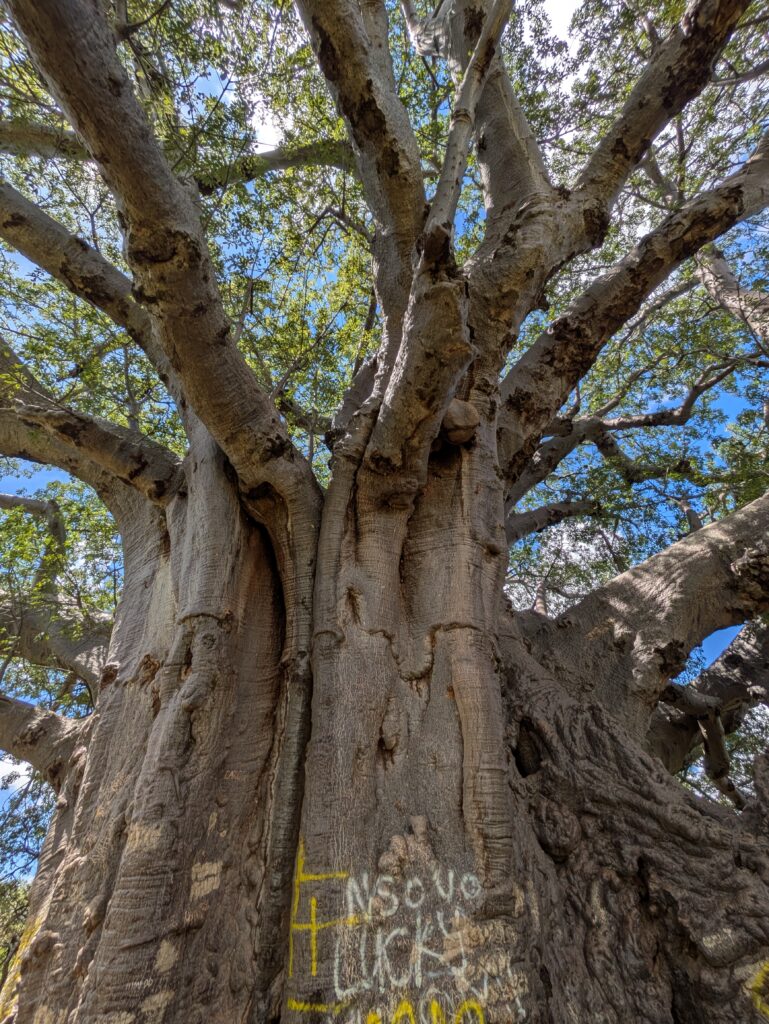
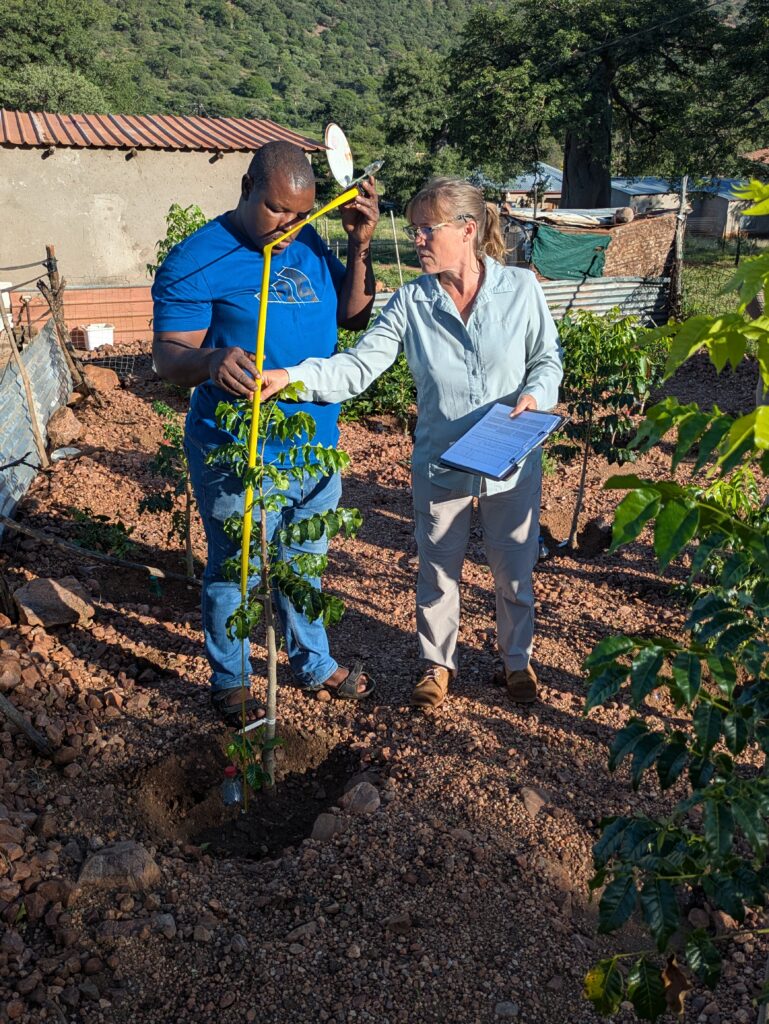
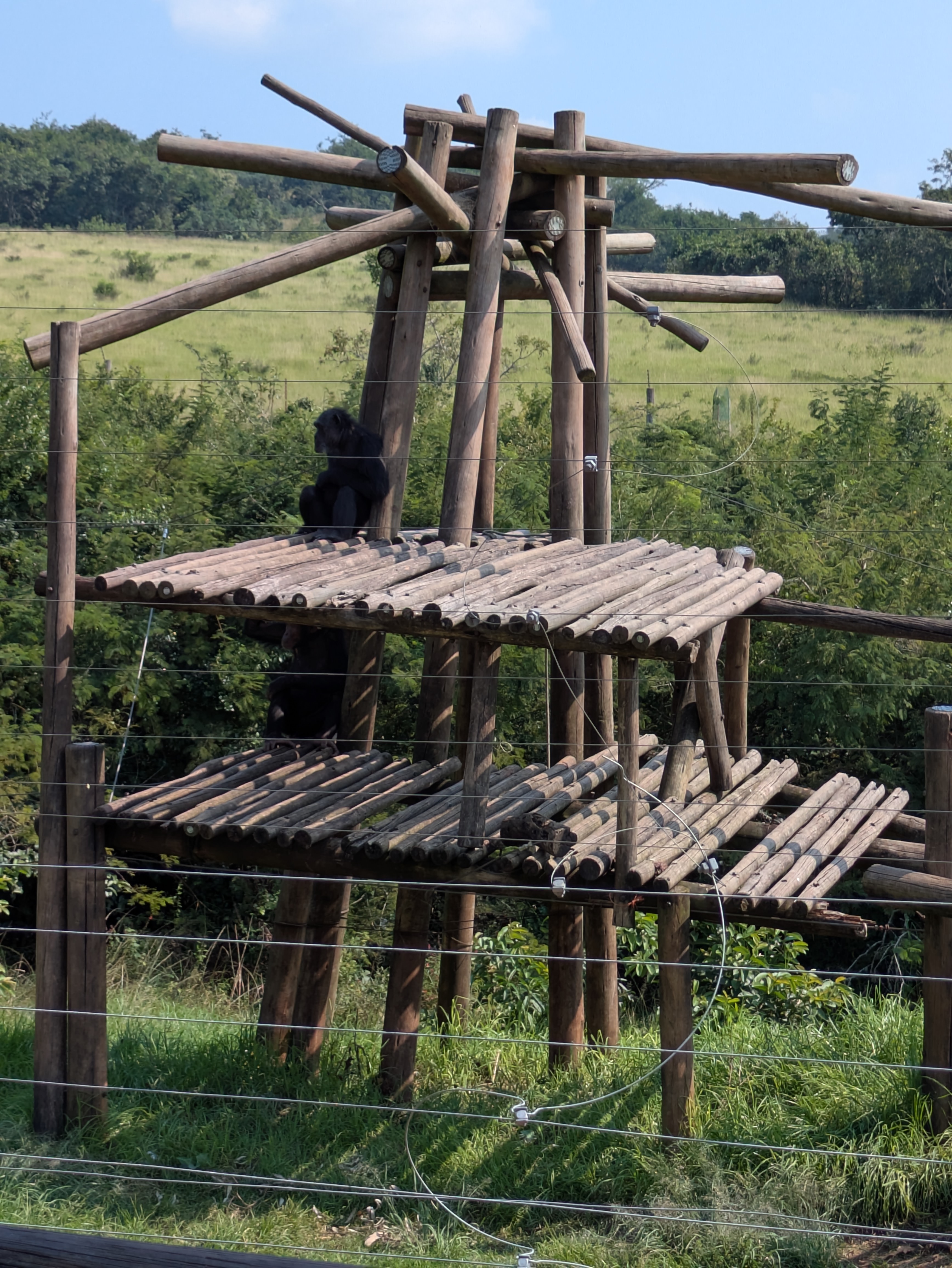
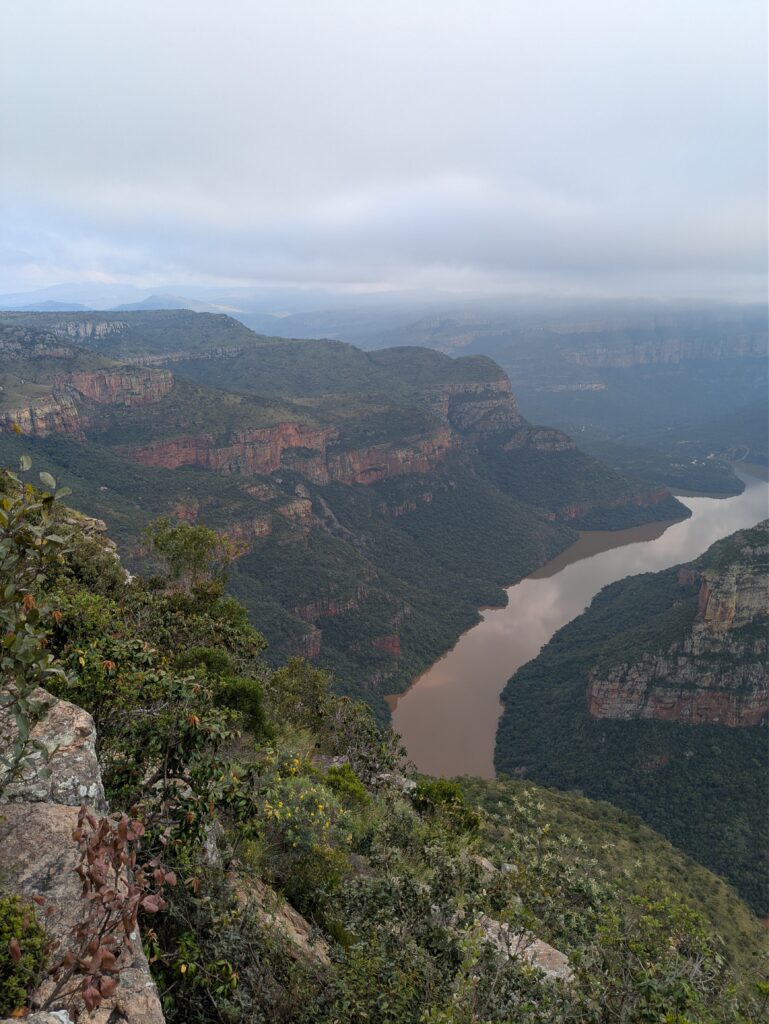
The “Big Tree”, Sarah monitoring tree growth, Chimp Eden chimpanzees, and Blyde River Canyon.
0 Comments